
Outdoor Furniture Materials Explained: What Lasts Best in Sun, Rain, and Salt Air
When shopping for outdoor furniture, one of the biggest factors in long-term satisfaction is material choice. Style matters, but if the furniture cannot handle the climate it will be used in, even the best-looking setup can wear out too quickly.
Sun, rain, humidity, and salt air all affect outdoor furniture differently. Some materials are better at resisting corrosion, fading, and moisture, while others require more maintenance to keep them looking their best. The right choice depends on where the furniture will be used, how much upkeep you want to do, and how long you expect the furniture to last.
In this guide, we’ll break down the most common outdoor furniture materials and explain which ones perform best in real outdoor conditions.
Why Material Choice Matters So Much
Outdoor furniture is exposed to the elements in a way indoor furniture never is. Heat, UV exposure, wind, rain, salt, and humidity all affect frames, finishes, fabrics, and hardware over time.
That means the material you choose influences:
- how long the furniture will last
- how much maintenance it will need
- how well it resists fading or corrosion
- how suitable it is for your climate
- whether it still looks good after regular outdoor use
For vacation homes and second homes, material quality matters even more because the furniture may spend longer periods exposed without constant upkeep.
Teak
Teak is one of the most respected premium outdoor furniture materials, especially for homeowners who want warmth, natural texture, and a high-end look.
Why teak is popular
Teak naturally contains oils that help it resist moisture and insects. It is strong, durable, and can perform very well outdoors when properly chosen and maintained.
Best for
- premium dining sets
- benches
- lounge seating
- natural, elevated patio designs
Things to know
Teak can weather into a silver-gray patina over time if left untreated. Many homeowners like that aged look, while others prefer to maintain the original golden tone through regular care.
Powder-Coated Aluminum
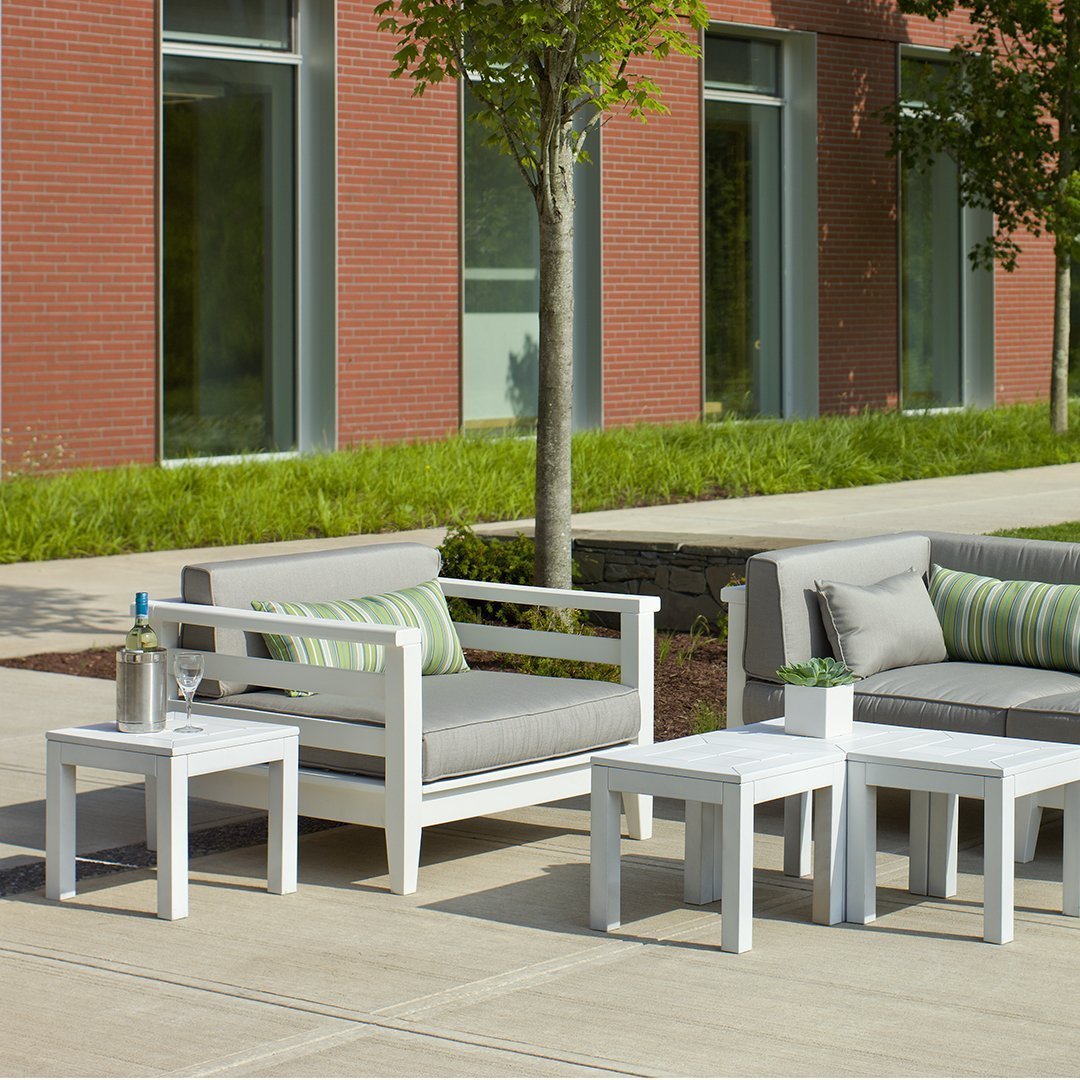
Powder-coated aluminum is one of the most practical outdoor furniture materials, especially for homeowners who want something durable, relatively lightweight, and easier to maintain.
Why aluminum works well
Aluminum naturally resists rust better than steel, and a quality powder-coated finish helps protect the frame from wear, fading, and weather exposure.
Best for
- outdoor dining chairs
- sectionals
- lounge chairs
- modern patio designs
Things to know
Quality matters. Better-built aluminum furniture tends to hold up much better than lower-end pieces, especially in harsher climates.
Poly Lumber and Marine-Grade Polymer
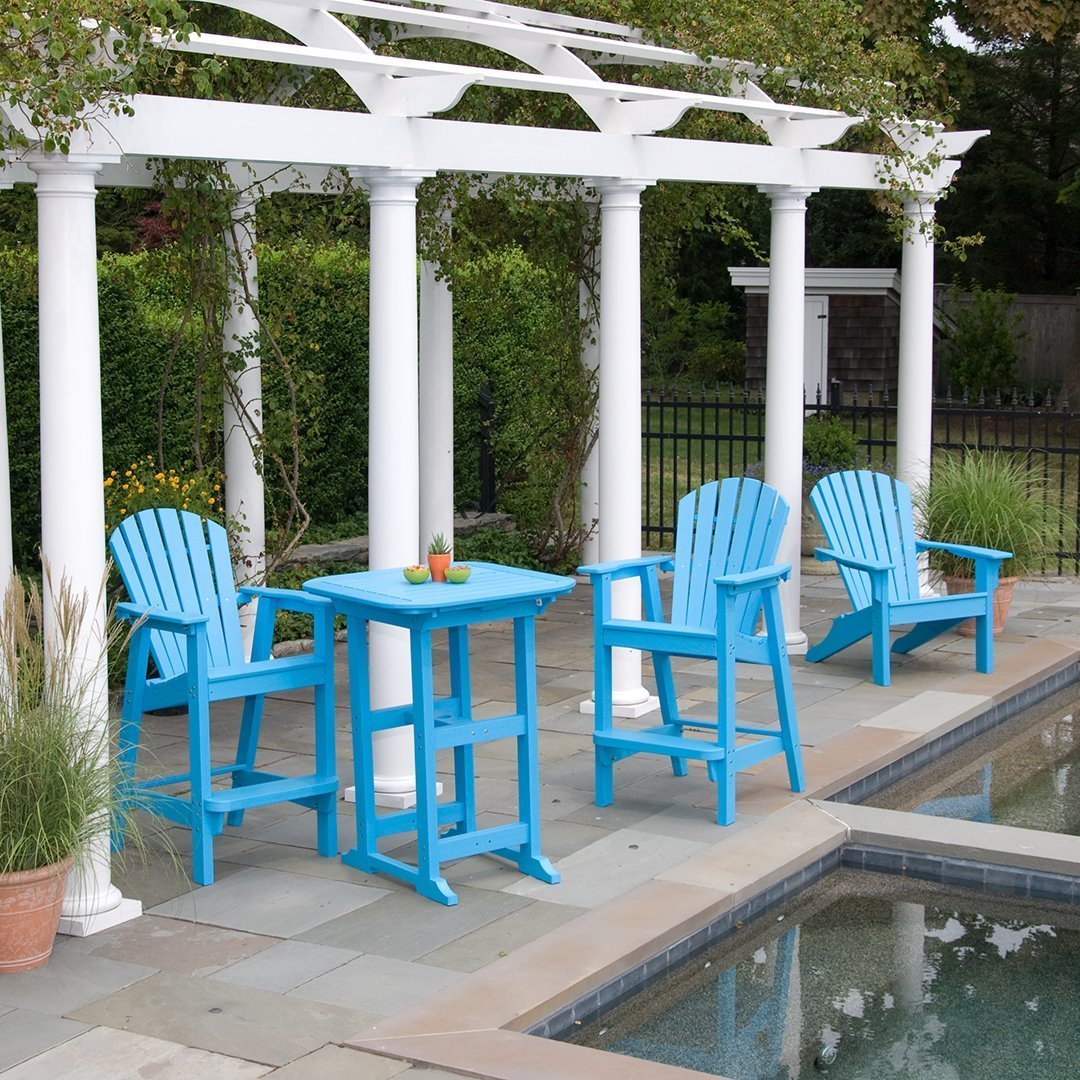
Poly lumber and marine-grade polymer are among the best choices for people who prioritize low maintenance and long-term weather resistance.
Why they work well
These materials are designed to resist moisture, fading, cracking, and many of the issues that affect lower-end outdoor furniture. They perform especially well in coastal and humid environments.
Best for
- beach homes
- second homes
- rental properties
- low-maintenance patios
Things to know
These materials may not have the natural look of teak, but they offer strong practical performance and are excellent for durability-focused buyers.
All-Weather Wicker
All-weather wicker can give outdoor spaces a softer, more classic look while still offering weather resistance when made well.
Why it appeals to buyers
Wicker-style outdoor furniture often feels inviting and works well in both traditional and transitional patio designs.
Best for
- conversation sets
- deep seating
- relaxed outdoor living spaces
Things to know
Not all wicker is created equal. High-quality synthetic wicker performs much better than cheaper materials, especially in sun and humidity. Lower-end versions may become brittle or break down faster.
Steel
Steel furniture can feel solid and substantial, but it is generally less forgiving in harsh outdoor environments unless it has excellent protective finishing.
Best for
- specific design styles
- buyers who want heavier furniture with less movement in wind
Things to know
Steel can be more prone to rust and corrosion than aluminum, especially in coastal climates or high-moisture environments.
Performance Outdoor Fabrics
Frames matter, but cushions and upholstery are just as important. Outdoor fabrics should be chosen with weather resistance in mind.
Look for:
- UV resistance
- mildew resistance
- moisture resistance
- strong color retention
- easy-clean surfaces
Good outdoor fabrics help the furniture stay comfortable and visually appealing over time, especially in sunny climates.
Best Materials for Coastal Homes
For coastal homes and salt-air environments, the best materials are usually:
- marine-grade polymer
- poly lumber
- powder-coated aluminum
- high-quality teak
- performance outdoor fabrics
These materials generally perform better when exposed to humidity, moisture, and salt in the air.
Best Materials for Vacation Homes and Rental Properties
For vacation homes and rental properties, the best materials are usually the ones that combine durability and lower maintenance.
Top choices include:
- powder-coated aluminum
- poly lumber
- marine-grade polymer
- performance fabrics
- high-quality synthetic wicker
These materials help reduce maintenance demands while still giving the patio a premium, comfortable look.
Best Materials for Premium Outdoor Design
If your priority is creating a more elevated outdoor look, the best materials often include:
- teak
- powder-coated aluminum
- premium wicker
- performance fabrics
- stone or durable composite tabletops
The key is choosing materials that support both appearance and real-world outdoor use.
How to Choose the Right Material for Your Climate
When comparing outdoor furniture materials, ask:
- Is my climate humid, dry, coastal, or mixed?
- How much direct sun will the furniture get?
- Will the home be occupied year-round or only seasonally?
- Do I want a natural look or a lower-maintenance solution?
- How much upkeep am I realistically willing to do?
The best material is not the same for every buyer. It depends on how the space will be used and what kind of ownership experience you want.
Final Thoughts
The best outdoor furniture materials are the ones that fit your climate, your maintenance preferences, and the way you use your outdoor space. Teak, aluminum, poly lumber, marine-grade polymer, and performance fabrics all offer strong benefits, but the right choice depends on the environment and your goals.
If you want outdoor furniture that lasts longer and performs better, material quality should be one of the first things you evaluate before making a purchase.
Shop Outdoor Furniture Built for Long-Term Outdoor Living
If you’re looking for premium outdoor furniture designed to perform in real outdoor conditions, explore our collection below.
Questions before you buy? Contact us here