
How to Protect Your Outdoor Grill During Rainy Season and Storm Weather
An outdoor grill is designed to live outside, but repeated rain, humidity, wind, and storm debris can still take a toll over time.
This is especially important during late summer, when many parts of the country experience thunderstorms, tropical weather, high humidity, and repeated periods of heavy rain.
For vacation homes and second homes, the challenge can be even greater. A grill may sit outside for days or weeks without anyone at the property to check it after a storm.
Fortunately, protecting an outdoor grill does not have to be complicated. A few simple habits can help keep your grill cleaner, reduce unnecessary weather exposure, and make it easier to enjoy when you are ready to cook.
Why Rain and Humidity Matter
Outdoor grills are built to withstand outdoor conditions, but constant exposure is different from occasional exposure.
Rain and humidity can contribute to:
- dirt and debris sticking to exterior surfaces
- moisture remaining around grill components
- greater cleaning requirements
- weathering of exterior finishes
- deterioration of lower-quality covers
- buildup around burners and cooking surfaces if maintenance is ignored
The goal is not to keep your grill completely isolated from the outdoors. It is to reduce unnecessary exposure whenever possible.
Start With the Right Grill Location
Where you place your grill can make a major difference.
A grill that sits completely exposed receives more direct rain and sun than one placed beneath an appropriate outdoor structure.
Depending on your property, consider locating your cooking area near:
- an outdoor kitchen
- a covered patio
- a pergola
- another properly designed outdoor entertaining area
Always follow the grill manufacturer's instructions concerning ventilation, overhead structures, surrounding materials, and required clearances.
A covered area should never interfere with safe grill operation.
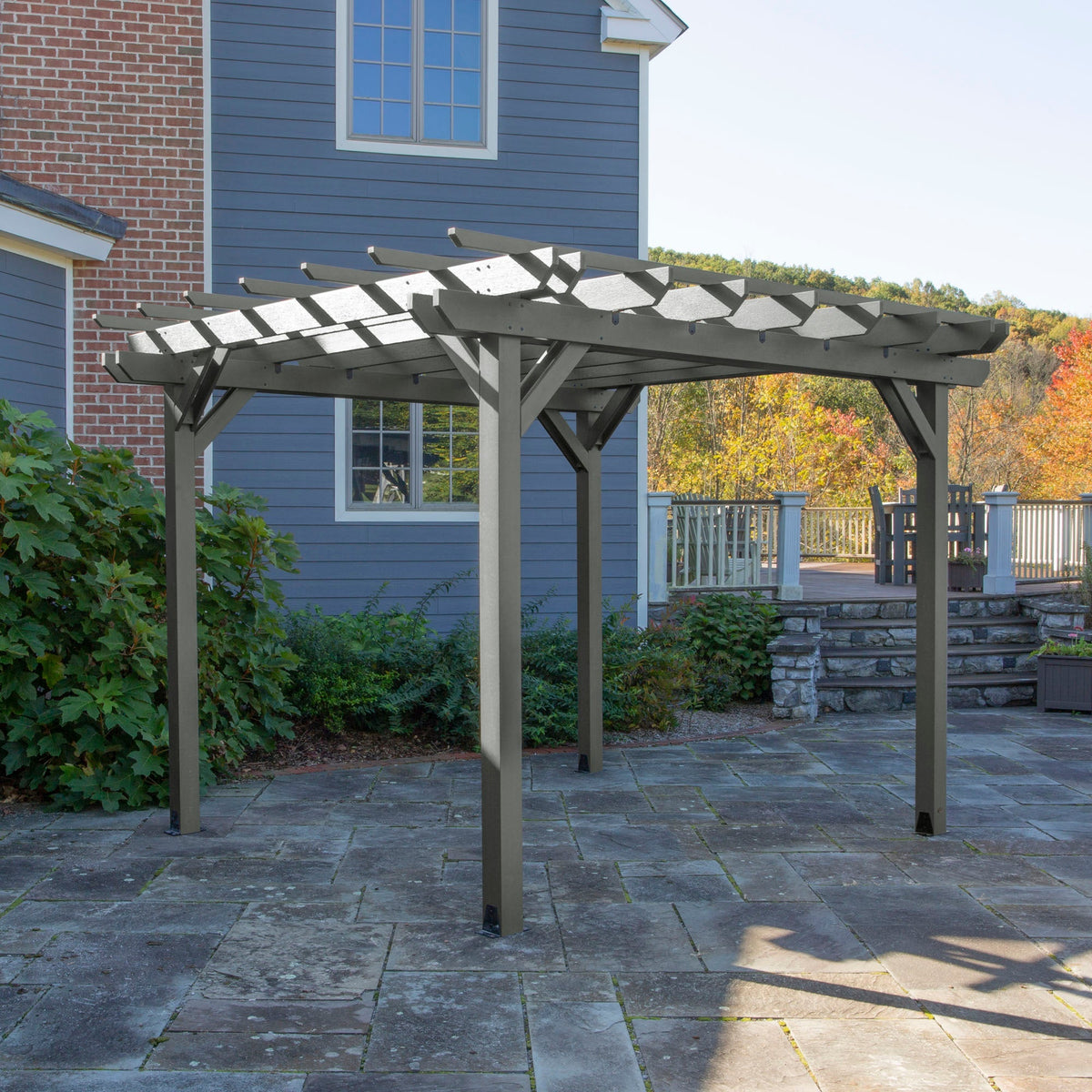
Vacation Home Furnishings currently carries Sequoia Outdoor St. Clair pergolas in several sizes, including 8x8, 10x10, 10x12 and 12x12 configurations. The 10x12 model, for example, is designed with enough coverage for dining furniture, lounge seating or outdoor kitchens.
Explore Outdoor Furniture and Pergolas
Use a Properly Fitting Grill Cover
One of the simplest ways to protect a grill between uses is with a properly sized outdoor cover.
A cover can help reduce exposure to:
- rain
- dirt
- leaves
- pollen
- airborne debris
- everyday weather
Fit matters.
A cover that is much too large may move excessively in strong wind. A cover that is too small may leave portions of the grill exposed.
Whenever possible, choose a cover designed for the dimensions and style of your grill.
Let the Grill Cool Before Covering It
Never place a cover over a grill that is still hot.
After cooking:
- turn the grill off according to the manufacturer's instructions
- allow it to cool completely
- perform any routine cleaning
- make sure surfaces are reasonably dry
- place the cover over the grill
This routine becomes particularly useful during rainy periods when you may want the grill protected soon after cooking.
Keep the Exterior Clean
Rain is not the only thing that lands on a grill.
Pollen, dust, grease, salt air, leaves, and other debris can collect on exterior surfaces. Add moisture, and that buildup can become harder to remove.
Periodic cleaning helps maintain the appearance of the grill.
Follow the manufacturer's cleaning instructions for the specific finish and materials used on your model.
Check the Grill After Major Storms
After severe weather passes, inspect your grill before using it again.
Look for:
- standing water
- shifted components
- damaged covers
- debris around the grill
- blocked ventilation areas
- signs that wind moved the grill or surrounding objects
If anything appears damaged, consult the manufacturer instructions before operating the grill.
Protect Built-In Grills Too
Built-in grills often look more protected because they are installed inside an outdoor kitchen, but the cooking appliance itself still lives outdoors.
The same general principles apply:
- keep it clean
- reduce direct weather exposure where practical
- inspect it after storms
- protect appropriate surfaces between uses
- follow manufacturer care instructions
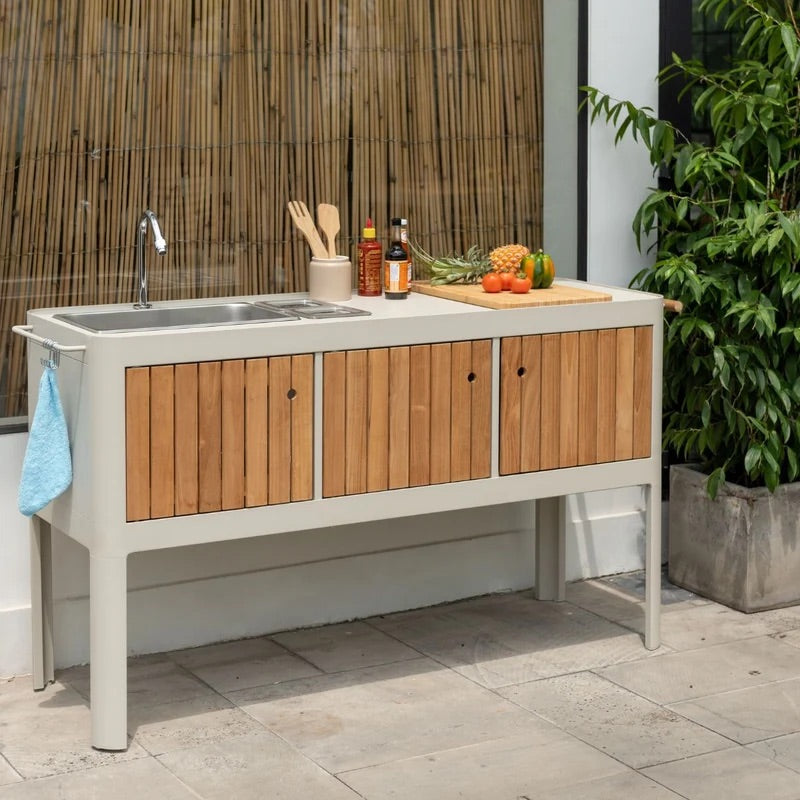
A well-planned outdoor kitchen can also create a more organized cooking space and provide additional counter and storage areas around the grill.
Vacation Home Furnishings currently carries outdoor-kitchen configurations such as the Kokomo Power Burner + 4-Burner 32-inch Built-In BBQ Grill Island Kitchen Package, which combines a stainless-steel grill and power burner in a complete outdoor setup.
Don't Forget Wind
Storm preparation is not only about water.
Wind can move lightweight accessories and patio items. Before severe weather arrives:
- remove loose grill tools
- secure lightweight furniture
- bring small accessories inside
- check the grill cover
- remove anything nearby that could blow into the grill
For vacation homes, this is a good task to complete before leaving the property for an extended period.
Extra Considerations for Coastal Homes
Coastal properties face another challenge: salt air.
Regular inspection and cleaning become especially important near the coast because exterior equipment experiences a combination of moisture, salt, wind, and sunlight.
If your grill is at a beach house or coastal vacation property, do not assume that stainless steel means maintenance-free. Follow the manufacturer's care instructions and clean exterior surfaces regularly.
Create a Simple Grill Protection Routine
A good routine does not need to take much time.
After cooking:
- clean as recommended
- allow the grill to cool
- remove food residue
- make sure surfaces are dry
- cover the grill
Before leaving a second home:
- inspect the grill
- secure accessories
- cover it
- check surrounding patio items
After a storm:
- inspect before using
- clear debris
- check the cover
- follow manufacturer instructions if anything looks unusual
Final Thoughts
Outdoor grills are made for outdoor living, but protecting them from unnecessary exposure can make ownership easier.
Rainy season, tropical weather, humidity, and strong storms are good reminders to pay attention to where your grill is located, how it is covered, and how often it is inspected.
The better you protect your outdoor cooking area between uses, the easier it will be to get back outside and enjoy it when the weather clears.
Upgrade Your Outdoor Cooking Space
Planning a better grilling area for your backyard, second home, or vacation property?
Need help comparing options?